
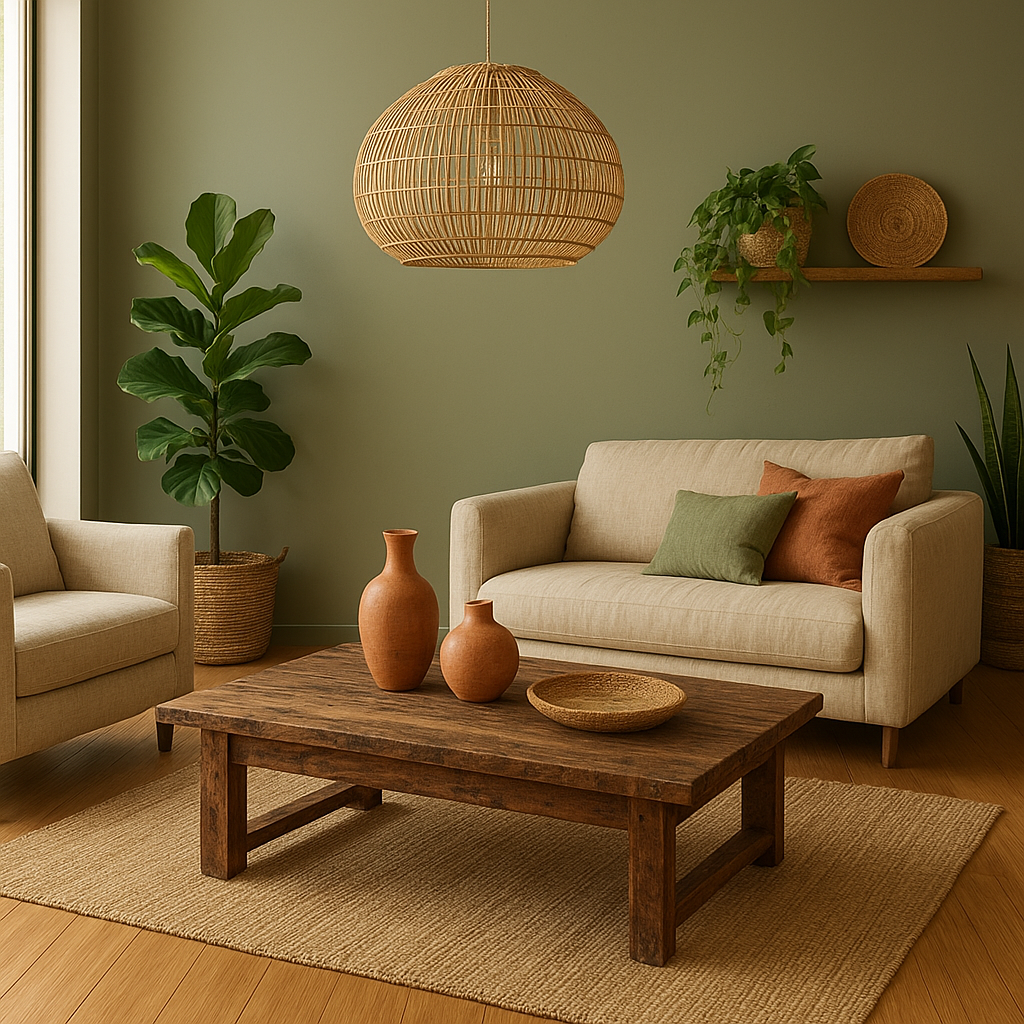

Something quietly significant is happening in the world of interior design. Homeowners, architects, and designers are rethinking not just how a space looks, but what it’s actually made of — and why that matters. Sustainable materials have moved well beyond a niche trend or eco-conscious novelty. They’re now sitting at the centre of thoughtful, forward-thinking home design, influencing everything from flooring choices to the textiles draped across a sofa.
This shift isn’t just about environmental responsibility, though that’s certainly a driving force. It’s also about quality, longevity, health, and a growing desire to live in spaces that feel genuinely considered rather than disposable. Here’s a closer look at why sustainable materials are reshaping interior design — and what that actually means in practice for the modern home.
The Growing Case for Sustainability in Design
The built environment — including our homes — accounts for a significant portion of global resource consumption. According to the Ellen MacArthur Foundation, the construction and furniture industries together generate enormous quantities of waste, much of it from short-lived, low-quality materials that end up in landfill within a decade. The interior design sector alone contributes substantially to this, with fast-furnishing culture encouraging frequent replacement over durability.
But attitudes are shifting. A 2023 survey by the Interior Design Society found that over 70% of homeowners now consider environmental impact when making significant home purchases — a figure that has nearly doubled over the past five years. Younger homeowners in particular are prioritising materials with verified sustainability credentials, lower embodied carbon, and transparent supply chains.
So why is sustainability important in design today? The answer is layered. At the most immediate level, it’s about reducing harm — choosing materials that don’t deplete finite resources or release harmful chemicals into the home environment. But it’s also about future-proofing spaces, supporting ethical manufacturing, and aligning living environments with broader personal values. A beautifully designed home built on sustainable principles isn’t a compromise — increasingly, it’s the gold standard.
What Sustainable Materials Actually Are (And Aren’t)
There’s a fair amount of greenwashing in the home industry, so it’s worth being clear about what genuinely sustainable materials involve. A material can be considered sustainable when it meets several criteria across its lifecycle:
- Renewability: It comes from a source that replenishes naturally, such as timber from certified forests, bamboo, or natural cork.
- Low embodied carbon: Its production, transport, and installation generate minimal greenhouse gas emissions.
- Non-toxicity: It doesn’t off-gas volatile organic compounds (VOCs) or contain harmful chemicals that degrade indoor air quality.
- Durability: It’s built to last, reducing the need for frequent replacement.
- End-of-life recyclability: It can be composted, recycled, or repurposed rather than sent to landfill.
Not every “natural” material automatically qualifies. Some natural stone, for instance, requires intensive extraction and long-distance shipping, which raises its environmental cost considerably. Conversely, some engineered or recycled materials — such as recycled glass tiles or reclaimed steel — can have excellent sustainability credentials despite being man-made. The key is looking at the full picture rather than surface-level assumptions.
Sustainable Building and Interior Materials Commonly Used in Homes
When people ask what sustainable building materials are commonly used for homes, the list has grown considerably richer in recent years. What was once limited to hemp insulation and cork flooring now spans a wide and genuinely attractive range of options.
Reclaimed and Certified Timber
Wood remains one of the most beloved materials in interior design, and when sourced responsibly it’s also one of the most sustainable. Reclaimed timber — salvaged from demolished buildings, old barns, or industrial structures — gives wood a second life while carrying a character and patina that no new material can replicate. Look for FSC (Forest Stewardship Council) certification when purchasing new timber, which guarantees responsible forestry practices.
Bamboo
Bamboo is technically a grass, not a wood, and it grows with extraordinary speed — some species mature in as little as three to five years compared to decades for hardwood trees. It’s incredibly hard-wearing, naturally antimicrobial, and increasingly available in sophisticated flooring, furniture, and cabinetry options. The key caveat is to check adhesives used in bamboo products, as some contain formaldehyde.
Natural Cork
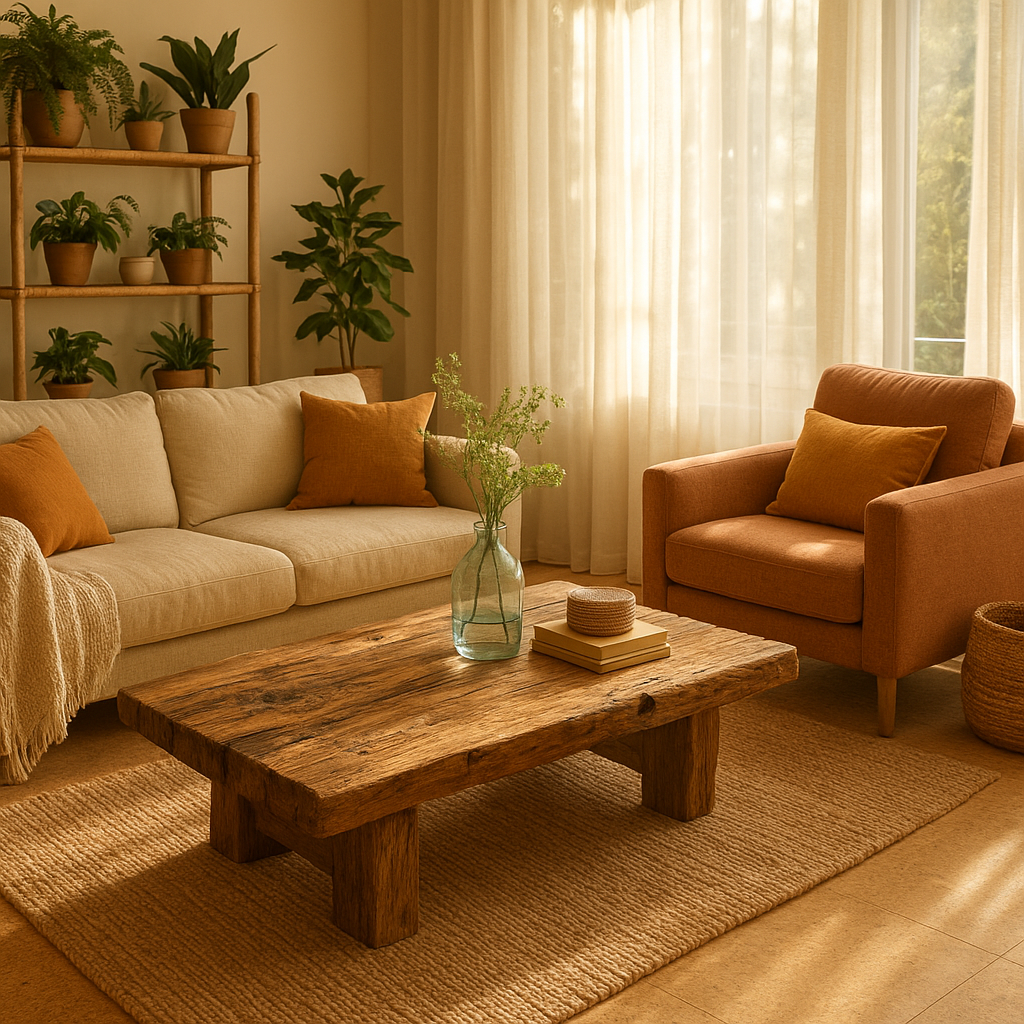
Cork is harvested from the bark of cork oak trees without felling them, making it one of the most genuinely renewable flooring materials available. It’s also naturally insulating, soft underfoot, and resistant to mould and mildew — practical benefits that align neatly with its environmental credentials.
Recycled and Reclaimed Materials
From recycled glass used in splashbacks and countertops to reclaimed brick used for feature walls, giving materials a second life dramatically reduces the demand for new resource extraction. Recycled metal, salvaged stone, and upcycled textiles all fall into this category. Many designers now actively source from architectural salvage yards, which can yield extraordinary one-of-a-kind pieces.
Natural Textiles
Linen, organic cotton, wool, and hemp are among the most sustainable textile choices for upholstery, curtains, cushions, and bedding. Unlike synthetic fabrics derived from petrochemicals, these materials are biodegradable and often produced with significantly lower chemical inputs. Wool, in particular, is a remarkable material — naturally fire-resistant, moisture-wicking, and extraordinarily durable.
Low-VOC Paints and Finishes
Perhaps the most accessible sustainable swap for any home, low-VOC and zero-VOC paints have become widely available and comparable in quality to conventional options. Traditional paints release volatile organic compounds into the air for years after application, contributing to poor indoor air quality. Natural alternatives made with clay, lime, or plant-based pigments offer beautiful finishes with none of the chemical burden.
How Sustainable Materials Enhance Wellbeing at Home
One of the most compelling arguments for sustainable interiors goes beyond environmental impact — it’s about how these materials make people feel. There’s a growing body of research linking the materials in our immediate environment to our physical and mental wellbeing.
Natural materials tend to have a tactile warmth and visual depth that synthetic alternatives struggle to replicate. Studies in biophilic design — the practice of connecting interior spaces to the natural world — have consistently shown that environments incorporating natural textures, colours, and materials reduce stress, improve mood, and even enhance cognitive function. Wood grain, stone texture, woven linen, and exposed brick all contribute to what researchers call a “restorative environment.” These same qualities underpin creating warmth and comfort at home, where even small material choices can have an outsized effect on how a space feels to live in.
Indoor air quality is another significant factor. Many conventional building and furnishing materials off-gas toxins over time — from formaldehyde in certain MDF products to flame retardants in synthetic upholstery. Choosing low-VOC or VOC-free materials, natural fibre textiles, and solid rather than particleboard wood furniture can meaningfully improve the air that occupants breathe every day.
The Best Materials for Interior Design: Balancing Aesthetics and Responsibility
The question of what the best materials for interior design actually are has no single answer — context matters enormously. But a framework for evaluation helps. The finest materials for any interior tend to share certain qualities: they age beautifully, they improve with use rather than deteriorating quickly, they suit the function of the space, and increasingly, they carry a story worth telling.
Stone, for instance — particularly locally sourced varieties — is extraordinarily durable and requires minimal processing. Marble, limestone, and slate have graced interiors for centuries precisely because they last. Paired with sustainable timber and natural fibre textiles, these materials form the backbone of interiors that feel timeless rather than trend-dependent. Understanding how interior design styles have evolved helps explain why such enduring materials have remained central to so many different aesthetic movements across the decades.
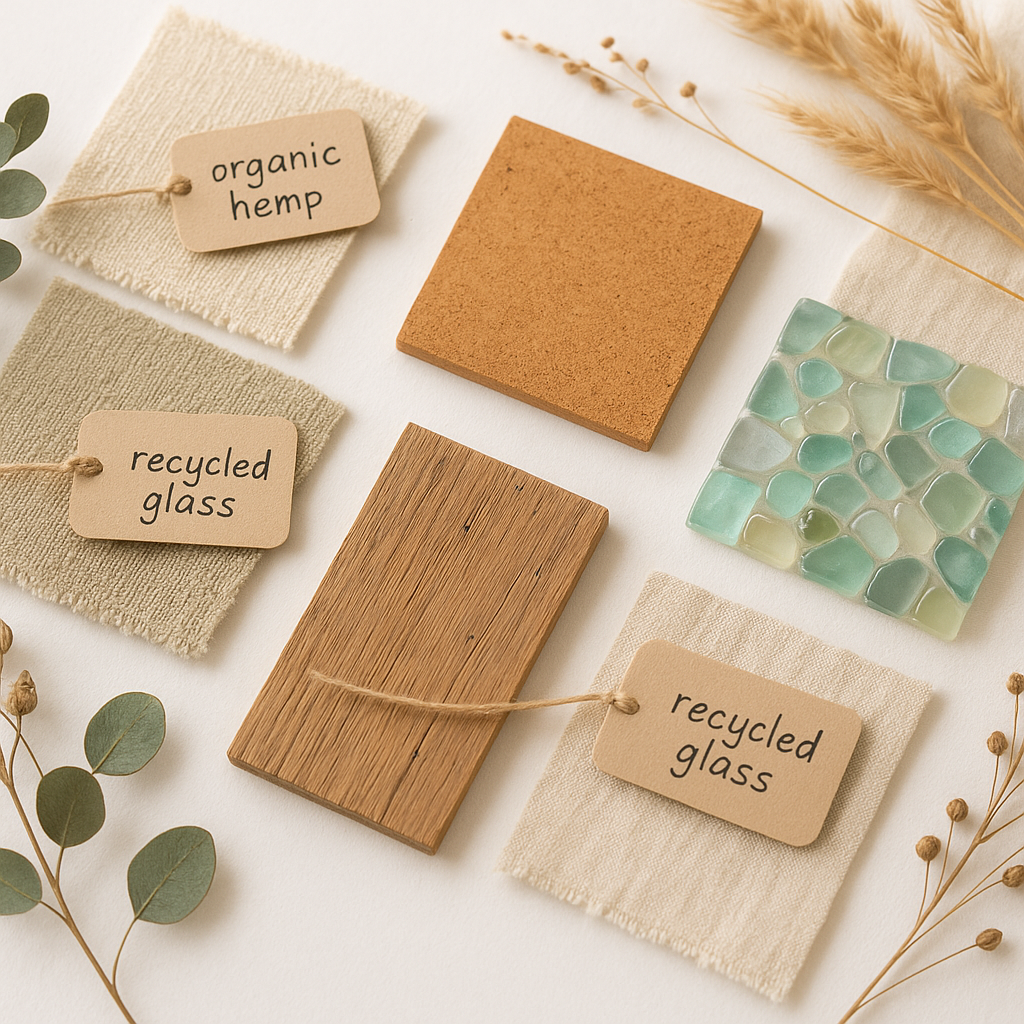
Designers are also increasingly exploring innovative newer materials. Mycelium-based composites (made from mushroom roots) are being used in acoustic panels and packaging. Hempcrete — a blend of hemp fibres and lime — is gaining traction as a breathable, carbon-sequestering building material. Terrazzo made from recycled glass and stone offcuts is experiencing a significant revival. These aren’t fringe experiments; they’re entering mainstream design consciousness.
Practical Steps for Incorporating Sustainable Materials at Home
Transitioning to more sustainable interiors doesn’t require a complete renovation. Even incremental changes made thoughtfully can add up to meaningful impact over time. Some practical starting points include:
- Prioritise longevity when purchasing furniture. A well-made solid wood piece may cost more upfront but will outlast several generations of flat-pack alternatives — and can often be repaired, refinished, or repurposed.
- Research certifications before buying. Look for FSC certification on timber, GOTS (Global Organic Textile Standard) on textiles, and Cradle to Cradle certification on a range of products as reliable indicators of genuine sustainability.
- Explore local and reclaimed sources. Architectural salvage yards, antique dealers, and local craftspeople often offer materials that are both sustainable and unique to a region — reducing transport miles and supporting local economies simultaneously.
- Swap out paints and finishes gradually. As redecoration occasions arise, switch to natural or low-VOC alternatives. The difference in indoor air quality can be noticeable within weeks.
- Consider whole-room rather than single-product thinking. The most sustainable interiors approach materials holistically, thinking about how everything works together over the long term rather than chasing individual green credentials in isolation.
The Wider Cultural Shift Behind the Trend
It would be a mistake to frame sustainable interior design purely as a practical or environmental matter. There’s a cultural dimension to this shift that’s worth acknowledging. The turn towards natural, durable, and ethically sourced materials reflects a broader reckoning with consumerism — a questioning of the fast, the disposable, and the cheaply made.
Movements like slow living, wabi-sabi (the Japanese aesthetic of finding beauty in imperfection and impermanence), and the broader mindfulness conversation have all contributed to a renewed appreciation for materials that carry meaning, age with grace, and connect occupants to the natural world. Interior design, perhaps more than any other discipline, is where these cultural values become tangible.
The homes people are choosing to create today are increasingly places of intentionality — spaces where every material has been considered, where quality is prioritised over quantity, and where beauty and responsibility aren’t seen as opposing forces but as deeply complementary ones.
Conclusion
Sustainable materials are reshaping interior design not because sustainability has become fashionable — though it certainly has — but because the logic is simply compelling. Materials that are renewable, durable, non-toxic, and thoughtfully sourced create better homes: healthier to live in, more beautiful over time, and less damaging to the world beyond the front door.
From reclaimed timber floors and cork wall tiles to linen curtains and clay-based paints, the options available to homeowners today are richer and more sophisticated than ever. The shift is underway, and for anyone thinking about their next home project, exploring the world of sustainable materials is a genuinely rewarding place to start.